


Sustainable
stays
How modular decking supports eco-friendly outdoor travel.
Eco-friendly is the new luxury
Sustainability isn’t a buzzword anymore. It’s a demand. Travelers want to support businesses that share their values, and outdoor hospitality is right at the center of that shift.
Campgrounds and glamping resorts, once seen as rustic getaways, are positioning themselves as eco-friendly havens that balance luxury with sustainability. At the heart of that shift is infrastructure, and modular decking delivers both environmental benefits and practical advantages.
The growing demand for sustainable travel
The rise of eco-tourism has made sustainability a key factor in travel decisions. More than ever, travelers want to know that the places they visit have a minimal environmental impact.
From solar-powered cabins to biodegradable toiletries, eco-conscious hospitality is about offering an authentic experience while shrinking your carbon footprint. Modular decking is a crucial part of that story, helping you hit sustainability goals without compromising quality or guest comfort.
The environmental benefits of modular decking
Concrete and asphalt
Significant environmental impact, and concrete production in particular is associated with high carbon emissions.
Responsibly sourced modular wood
A much greener alternative, built from a renewable material with far less waste.
-
Renewable materials
Sustainably sourced wood has a much lower carbon footprint than other building materials, and responsibly sourced pressure-treated lumber helps conserve forests for future generations.
Many decking companies now work exclusively with certified lumber from sustainably managed forests, supporting regeneration instead of depletion.
-
Reduced waste
Components are prefabricated off site and assembled on location, so there’s minimal on-site cutting, sawing or scrap.
Compare that with traditional construction, where leftover materials often end up in landfills.
-
Lower carbon footprint
Durable, long-lasting decks mean fewer resources spent on replacements. Unlike concrete, which needs heavy machinery, modular wood decks can be assembled by hand.
When it’s time to replace them, they can often be taken apart and reused or recycled.
Lighter on the land
-
Less soil disturbance
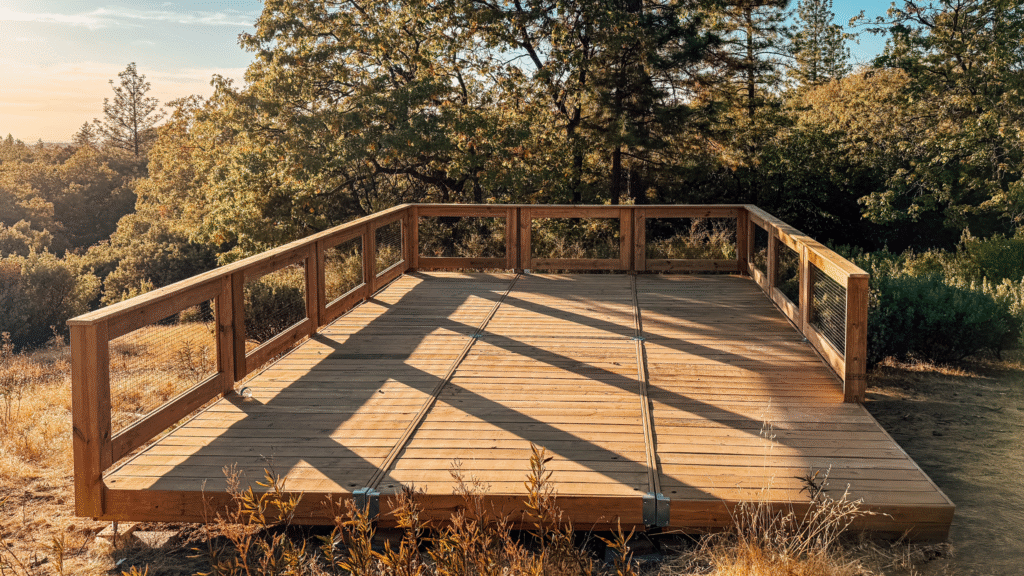
Concrete pads and permanent structures often mean digging and grading, which can cause erosion and destroy vegetation. Many modular systems use adjustable footings that need no digging or concrete foundations, preserving the landscape.
-
Less erosion in busy areas
That same design reduces erosion risk around high-traffic spots like tent platforms and gathering spaces.
-
Healthier ground
Raised decks allow better drainage and prevent soil compaction, which matters most in wetlands and forests that rely on natural water flow.
-
Room for wildlife
Elevated decks let animals move freely underneath, reducing disturbance to sensitive habitats.
The greenest deck is the one you don’t have to replace.
Built to last, by design
Pressure-treated wood resists rot, pests and weather damage, so modular decks need less maintenance and fewer replacements over the years. That means fewer new materials and a smaller environmental impact.
For campgrounds, glamping sites and other outdoor venues, durable, low-maintenance decking cuts down on repairs and resource use. Simple upkeep like resealing or staining is an easy, sustainable way to keep a deck functional and good-looking for years.
Your green site checklist
Sustainability goes beyond the deck. A truly eco-friendly campground or glamping resort brings these practices together:
-
Solar power
Panels to power lights, heating and amenities.
-
Water conservation
Low-flow showerheads and composting toilets reduce water use.
-
Eco-friendly furnishings
Reclaimed wood, repurposed materials and sustainable fabrics for furniture and decor.
-
Waste reduction
Encourage recycling and composting across the site.
Together, these create a complete, sustainable experience that appeals to the growing base of eco-conscious travelers.
Market your sustainable commitment
Guests increasingly choose destinations based on environmental credentials. Modular decking is a responsible choice for the planet, and it tells your guests that sustainability is a priority.
Put these terms to work in your marketing:
- Sustainable construction
- Green travel
- Eco-friendly decks
Use them on your website, social media and booking platforms to attract travelers who share your values and position your business as a leader in responsible outdoor hospitality.
Eco-friendly doesn’t mean sacrificing comfort
Green means roughing it
A common misconception is that sustainable practices require giving up comfort or luxury.
Green and comfortable
Eco-conscious travelers expect comfort. Glamping sites offer luxury beds, stylish decor and climate control while staying committed to sustainability.
Modular wooden decks are the foundation for those high-end experiences, with custom finishes, stylish railings and built-in seating that enhance the natural setting and give guests a safe, comfortable place to relax.
A greener future for outdoor travel
As sustainability drives travel and hospitality trends, campground and glamping owners have a chance to make a lasting impact. Modular decking reduces your environmental footprint, creates beautiful, functional spaces and meets the growing demand for eco-friendly stays.
It’s one piece of the puzzle, but a vital one. With minimal environmental impact, long-term durability and natural appeal, modular wood decking is an investment in both your business and the planet.
Build a greener stay
Lighter on the land, built to last.
